
Workshop reflections on hope, collaboration and building just futures

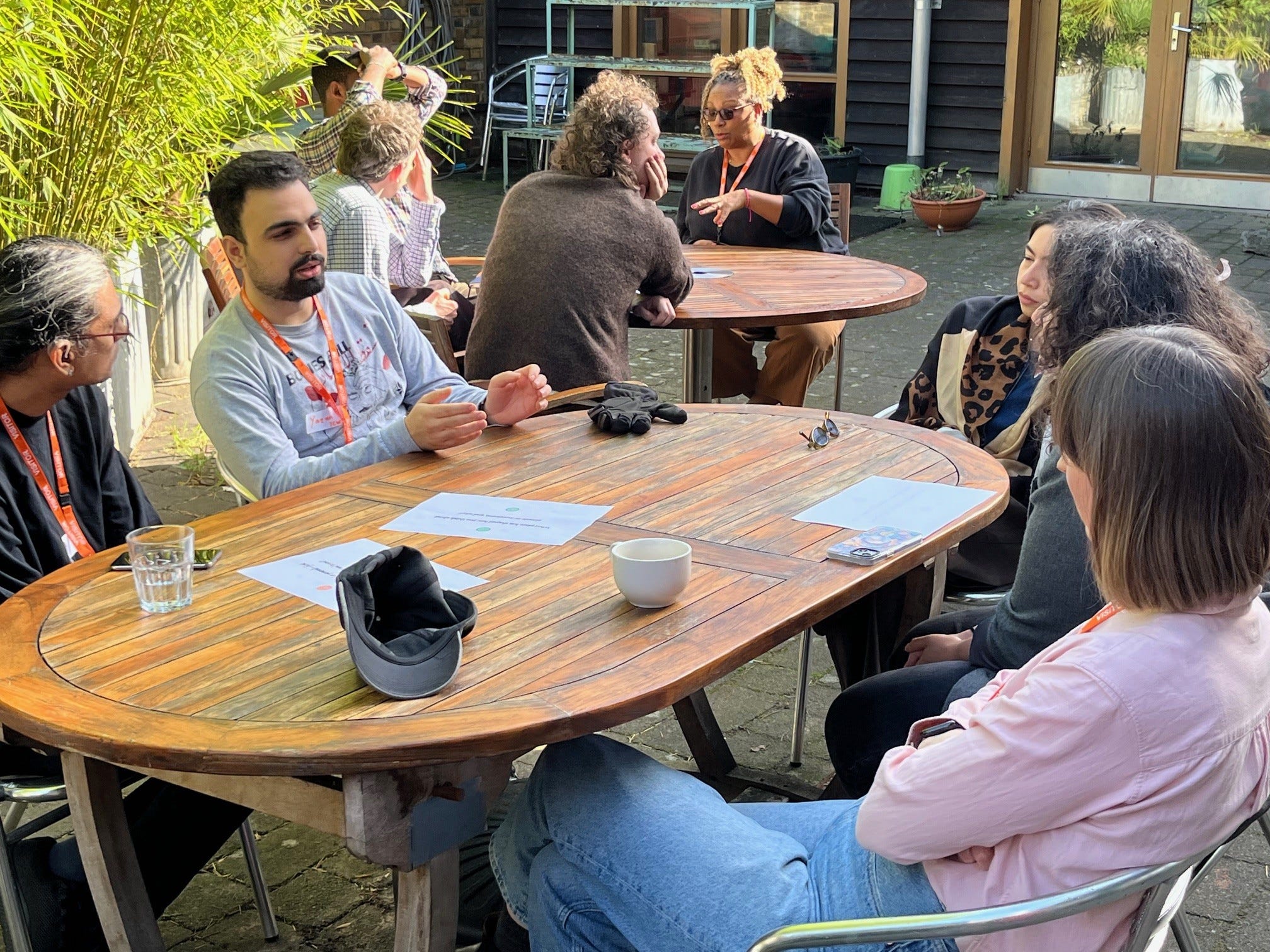
The week of our community Connections workshop, the sunshine finally arrived. As we gathered around garden tables in the dappled light of the leafy courtyard, determined to imagine and build a more just future, it actually felt - tangibly - that such a future might be possible.
Opening With Honest Hope
We began with a quote from Gaia Vince’s Nomad Century which we’ve shared many times already: “The planetary nature of humanity’s crisis can feel overwhelming, and our situation hopeless. It is not… Uncertainty stops us planning, preparing, and even looking too far into the future… [We must find] the courage to envision a different way of being human.”
The line felt even more resonant now than when she wrote it. With frightening global shifts toward fascism, escalating climate breakdown, attacks on migrants, unaccountable leaders launching entire regions into conflict, and an extractive economic system controlled by tech elites, there’s a lot to worry about.
But this is exactly why we gathered. For us, this work, and this event, was about looking up and out of our own siloes and recognising that the world we want to create must be built, and we all have a role to play. When it comes to communicating about climate and migration justice, that means being honest about where we are at whilst creating stories of hope and identifying pragmatic solutions that benefit us all – across housing, health, civic infrastructure, democracy and more.
Grounding Ourselves: Our Organising Manifesto
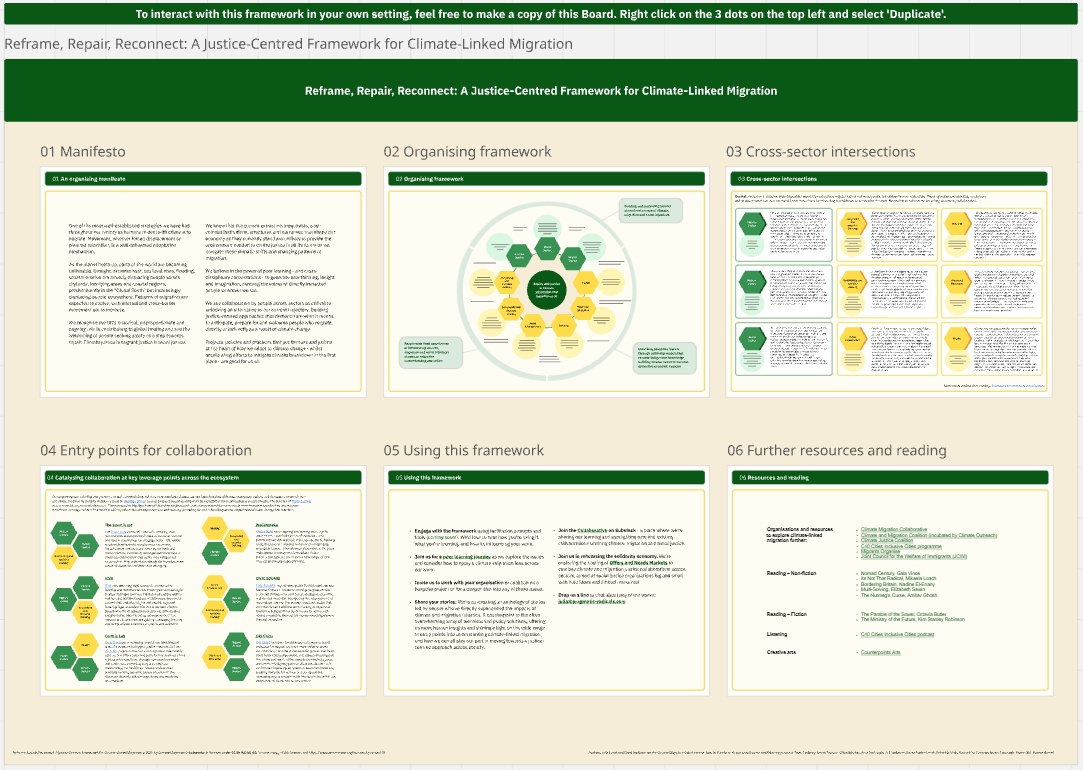
Together, we rooted the event in the organising manifesto that has emerged from countless conversations with many of you—both in the room and across our wider Substack community.
At its core is a simple truth: People have always moved. Movement is a natural form of adaptation. We must resist the weaponization of migration as a tool of oppression.
Migrant justice is climate justice is racial justice.
This shared grounding helped us hold the complexity of the moment while staying connected to each other and to the long arc of change we’re part of.
A Journey Through Layers: Past, Present, and Future
We then shifted into a more personal, reflective space using the Human Layers Reflection developed by Ella Saltmarshe and hosted through the Collective Imagination Toolkit (Huddlecraft and Canopy for JRF Emerging Futures).
The exercise is a powerful one, and it aimed to expand our capacities to think like good ancestors, strengthening our collective capacity to imagine beyond crisis, beyond urgency, and toward possibility.
Participants then explored two questions that opened up vivid, emotional conversation:
What experience - professional or personal - first made climate‑linked migration feel real to you?
What place has shaped how you think about climate or movement, and why?
These reflections helped us name what motivates us, what anchors us, and what futures we feel accountable to.
Collective Questions for Collective Futures
Next, we invited the wider group to sit alongside our peer learning cohort to explore some live, emergent collaborations, organising around two themes.
How might we—together as climate, migration, and racial justice organisations—
shape the narrative around climate migration
develop community‑led approaches to climate migration and adaptation
…so that justice remains at the centre of everything we do?
Already, promising collaborations are emerging:
A NorthWest Climate Migration Circle is forming—a peer thinking and solidarity space for organisers in and around Manchester. They’re dreaming big.
In Glasgow, an emerging new partnership between climate and migration organisations is building on, around and with strong existing progressive community infrastructure.
These are early signals of what is possible when we align our work across sectors, movements, and lived experiences. And we’ll be sharing more insight from the peer learning programme later in the year.
Practising Connection: The Offers and Needs Market
In the second half of the day, we held an Offers and Needs Market. This is a simple but transformative tool, created by the Post Growth Institute, that represents a conscious shift into a solidarity economy. It can disrupt colonial, capitalist default behaviours and unlock different ways to be in relationship with one another. It can be a simple, fast, effective way to resource a movement
Participants shared 149 offers and needs across the room.
That’s 149 opportunities for connection, collaboration, resource‑sharing, and mutual support across everyone from grassroots organisers challenging the fossil fuel and borders industries to organisations working in global mayoral diplomacy for just climate action.
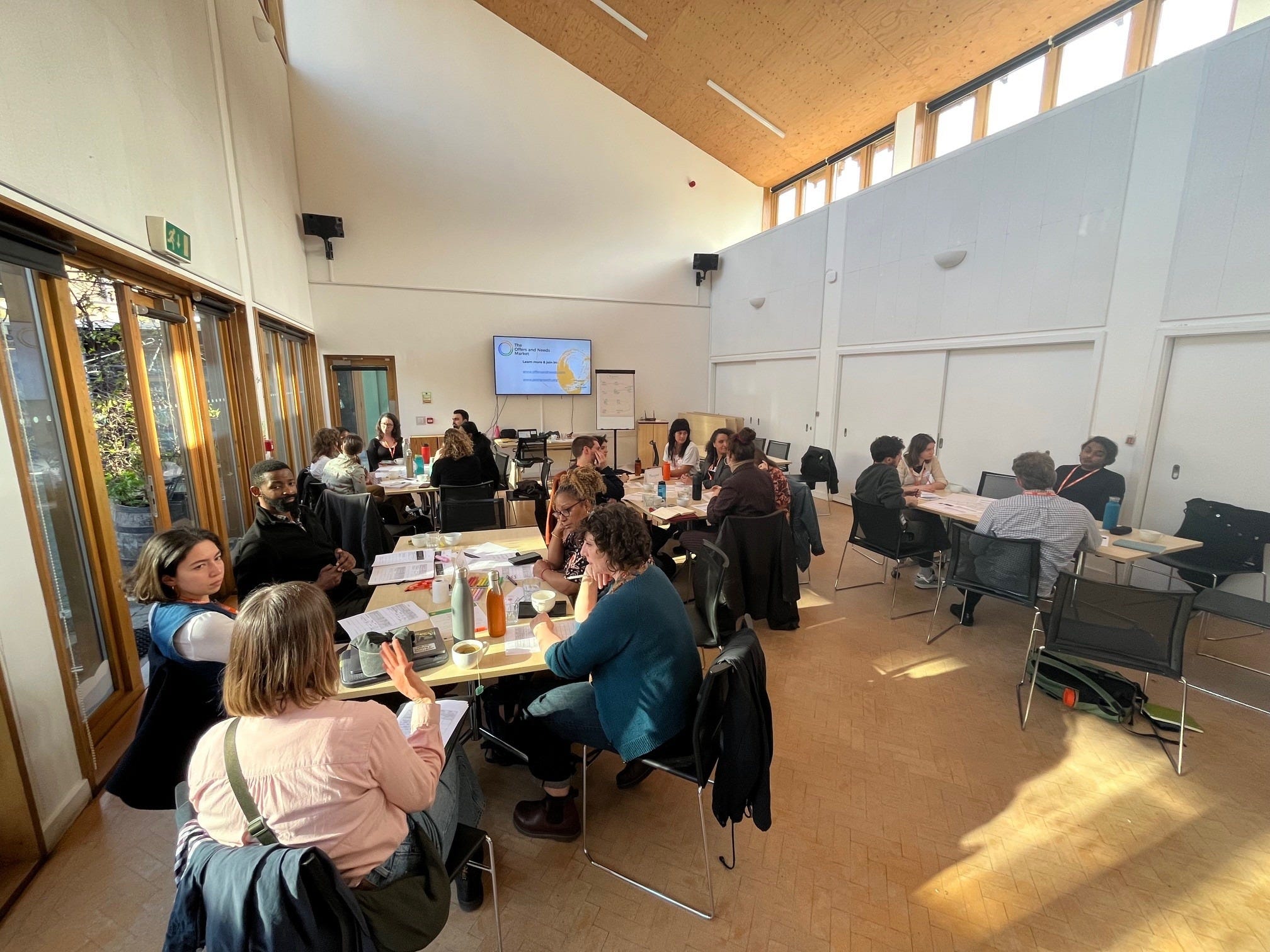
It was a reminder that despite organisational ego, scarcity mindsets, and structural barriers, collaboration is not only possible—it’s already happening when we create the right conditions.
At the moment, the Offers and Needs resource is only available to those who were part of these initial conversations. But we’re exploring how we might partner with others to build a bigger, more open resource that anyone can access. For now, we’re celebrating the spirit of the day, and those 149 sparks of possibility.
If you were there, thank you for your openness, your honesty, and your imagination. If you weren’t, we hope these reflections bring you into the circle and inspire you to look around at the connections you might make beyond your immediate ecosystem as we find ways to make a just transition for all.